Marine Paint Primer Guide: Match the Surface and Finish
2026 guide series · Editorial timeline: July 17, 2026. First published October 27, 2026.
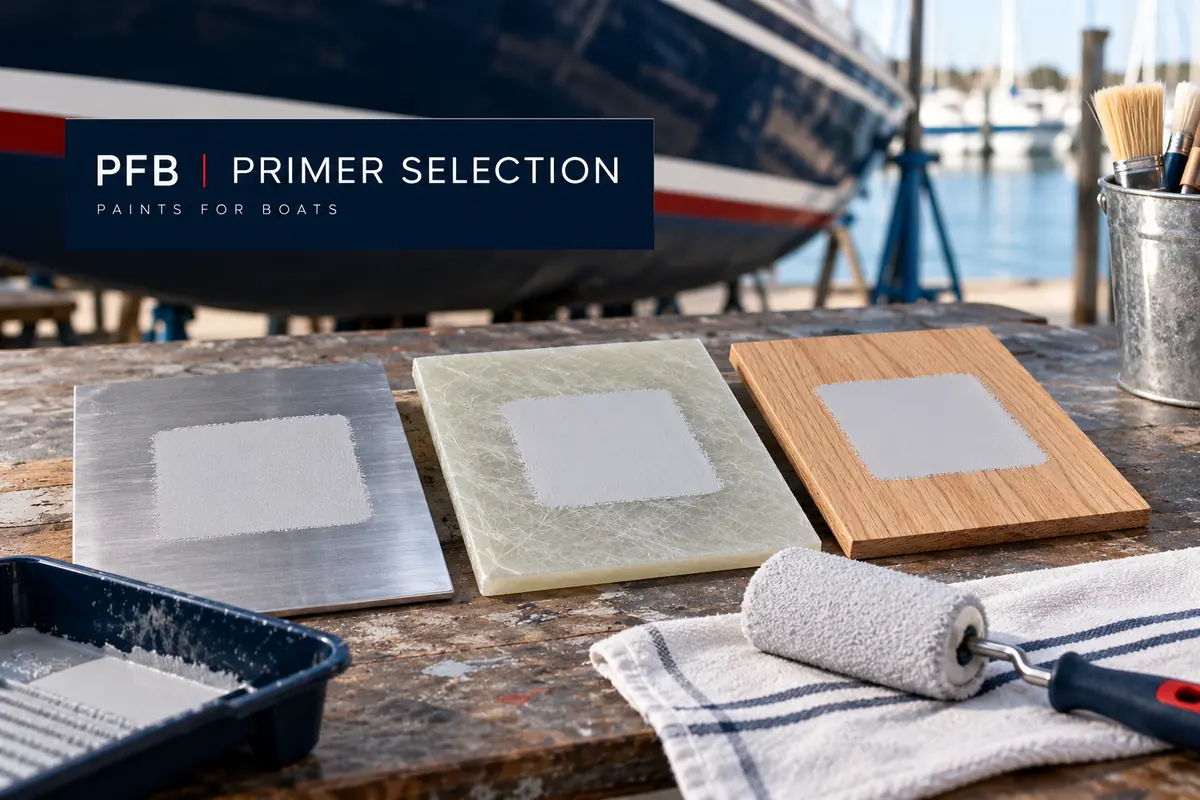
The right marine paint primer is the one specified for the surface underneath it, the finish above it, and the exposure it will face. A can labeled "multi-surface" or "metal primer" does not answer all three questions.
Start with a system choice, then plan preparation and quantities. This guide focuses on choosing and applying primer for maintenance painting, especially above the waterline. For the wider job sequence, see how to paint a boat hull.
Identify the job before choosing a primer
Write down the substrate, existing coating, and service conditions for each area. An aluminum hull side, fiberglass cabin, and steel fitting need separate decisions even when they share a finish color.
Keep these primer functions distinct:
| Function | What to confirm in the system documentation |
|---|---|
| Substrate adhesion | Explicit approval for the actual material and its preparation |
| Corrosion protection | Approved metal type, preparation standard, and required film build |
| Surfacing or undercoating | Sanding properties and permitted finish coats |
| Barrier protection | Immersion approval, required thickness, and bottom-coating sequence |
A barrier primer is not automatically a fairing compound. TotalBoat distinguishes its barrier coating from ordinary adhesion primers and states that it cannot replace filler. Use that distinction when reading any brand's specifications. TotalBoat barrier-primer guidance.
Match the primer to the substrate
Fiberglass and repaired epoxy
Determine whether you are coating intact gelcoat, exposed laminate, filler, or an epoxy repair. Each may need a different preparation step. Wax and amine blush require the specified cleaning process before sanding; grinding contamination into the surface can undermine adhesion. The repair also needs sufficient cure before coating. TotalBoat topside-primer instructions.
Do not use primer to conceal unresolved cracks or damaged laminate. Inspect and repair the cause first. Our fiberglass topside painting guide explains how to organize that work.
Steel and aluminum
For steel, specify rust and scale removal with the chosen coating manufacturer. For aluminum, obtain the aluminum preparation schedule, including any required pretreatment and the permitted interval before priming. Interlux provides different preparation guidance for these metals; "metal" is not a complete substrate specification. Interlux substrate guidance.
Confirm the current data sheet before following any product suggestion in an aluminum boat painting guide. Do not add an etching wash or self-etching primer unless it belongs in the selected system. Layers chosen independently can create a compatibility problem.
Wood and existing paint
Wood needs to be sound and dry within the selected system's requirements. A coating cannot repair rot or moving joints. Existing paint needs a separate assessment: identify it where possible, inspect adhesion, and remove failing material before selecting an overcoat. Interlux finish-application guidance.
Verify the PFB primer data before ordering
Use the PFB Surface Primer Multi-Surface and PFB Marine Metal Primer pages to identify the products you want to discuss, then request their matching current technical data sheets.
The available Dux Acrylic Latex Primer #398 sheet describes an interior wallboard, plaster, and masonry primer. It does not establish approval for exterior boat surfaces. The Dux Red Oxide Primer #343 sheet describes an alkyd-modified industrial maintenance primer; it does not establish aluminum or immersion approval, or identify a zinc-phosphate formulation. These supplier documents do not justify treating either PFB listing as an interchangeable marine primer. Dux acrylic primer sheet, Dux red oxide primer sheet.
Ask for written confirmation of the exact product code, substrate, exposure, topcoat, and preparation schedule. Resolve differences between a listing and its technical documentation before purchase. For several boats or a yard project, include those details in a bulk inquiry.
Apply the approved system in a controlled sequence
- Clean before sanding. Remove contamination using the specified cleaners. Awlgrip explains that sanding first can embed wax, oil, and grease in the surface. Awlgrip application guide.
- Prepare each exposed material. Follow its required abrasive grade or profile. Repair defects and remove dust without recontaminating the work.
- Check application conditions. Record surface temperature, humidity, and condensation risk through drying, using the product's limits. A warm afternoon does not guarantee a dry surface overnight. Interlux weather guidance.
- Build the specified film. Measure rather than judging coverage by color alone. Base your paint quantity calculation on the specified coverage, coat count, and application losses.
- Respect the overcoat schedule. Record application times and follow sanding requirements if an interval is exceeded. Primer that feels dry may still require more time before the selected topcoat.
Above-waterline approval does not authorize continuous immersion. Choose a documented bottom system for submerged areas; see topside paint versus bottom paint. Interlux also warns that prolonged wet contact with trailer padding can blister topside coatings. Interlux immersion guidance.
Frequently asked questions
Does every boat paint job need primer?
No. The specified system and surface condition determine whether primer is required. Bare metal, repaired areas, and a sound existing finish can have different requirements.
Can I use one primer on aluminum, steel, and fiberglass?
Only when the current technical data sheet explicitly approves each substrate, its preparation, and the intended exposure and topcoat. A general metal claim is insufficient.
Can marine primer replace bottom paint?
An above-waterline primer cannot replace an immersion-rated bottom system. Barrier primers and antifouling coatings perform different jobs and must be selected as a compatible system.
How long should primer dry before topcoating?
Use the specified minimum and maximum overcoat intervals at the actual conditions. Touch-dry time is not the same as readiness for sanding, topcoating, or immersion.
Sources
- Dux Acrylic Latex Primer #398 technical sheet
- Dux Red Oxide Primer #343 technical sheet
- TotalBoat topside-primer instructions and barrier-primer guidance
- Interlux substrate preparation, finish application, weather, and immersion guidance
- Awlgrip application guide, surface cleaning and system preparation
Need to know how much paint to buy?
Start with your boat dimensions, then check coverage and coats against the selected coating's technical sheet.
Use the Paint Calculator →