Topside Paint vs Bottom Paint: Choose by Water Exposure
2026 guide series · Editorial timeline: August 20, 2026. First published October 27, 2026.
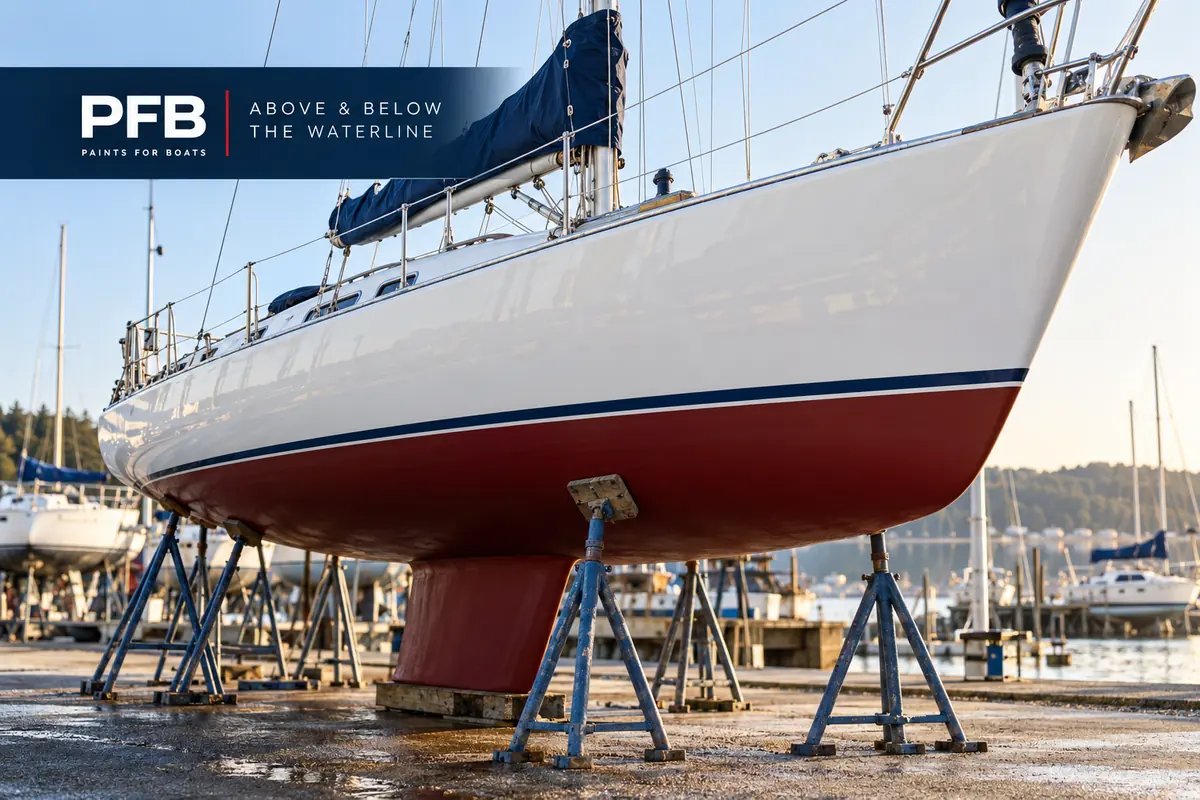
Topside paint and bottom paint serve different parts of a boat. The first decision is where the surface sits relative to the waterline and how long it stays wet. The next is what the coating needs to do: provide an exposed finish, protect a substrate, control marine growth, or form part of a system that does several of these jobs.
Do not choose solely by color, gloss, or the word “marine.” Before buying, describe the actual exposure and identify the hull material and existing coating.
What topside paint does
Topside finishes are intended for exposed areas above the waterline, subject to each product's instructions. They provide the visible finish on surfaces such as hull sides and cabin exteriors. A product suitable for a vertical hull side is not automatically a suitable nonslip deck finish.
The manufacturer's use statement is more useful than a broad marketing label. For example, the Dux Heavy Duty Polyurethane Enamel technical sheet specifically describes its marine use as above water level. That wording does not establish an antifouling function or approval for continuous immersion. Source: Dux Heavy Duty Polyurethane Enamel technical sheet.
If you are considering PFB Pro Marine Enamel or PFB Marine Enamel Standard Gloss, obtain the current supplied product's technical instructions for your substrate and location. Treat these as above-waterline product options; do not substitute them for an immersion-rated or antifouling system.
What bottom paint does
In everyday boat maintenance, “bottom paint” commonly means antifouling paint for underwater surfaces. Its selection concerns the growth the boat encounters, the time it stays afloat, the way it is used, and compatibility with the hull and existing coatings.
Two common categories are hard antifouling and ablative antifouling. Hard products retain a coating film; ablative products are designed to wear away in use. These differences affect maintenance and selection, but the individual product's instructions determine whether it suits your usage and storage pattern. Source: TotalBoat bottom paint guide.
A boat left at a mooring and a boat launched for occasional day trips present different projects. Record how the boat will actually be used, including any longer trips planned after the repaint. Choose for that exposure rather than last season's routine.
Barrier coats and antifouling are separate layers
A barrier coat is not another name for antifouling. Its role concerns protection beneath the finish or antifouling layer, according to the specified system. For example, TotalBoat identifies TotalProtect as an epoxy primer and barrier coat for gelcoat blister prevention and repair and describes overcoating it with antifouling. Source: TotalBoat TotalProtect instruction sheet.
When a proposed underwater system includes both, plan them separately. Check substrate preparation, required barrier-film build, antifouling compatibility, and the transition between the two. Do not assume that an above-waterline primer provides the same function.
Our marine paint primer guide helps organize those checks. Keep product names and technical sheets together so “primer” does not become an interchangeable item on the shopping list.
Compare the three jobs
| Coating category | Main question it answers | What to verify |
|---|---|---|
| Topside finish | What exposed finish belongs above the waterline? | Substrate, existing paint, primer, application, and water-exposure limits |
| Underwater barrier coat | What protective layer does this underwater system require? | Approved substrate, film build, and overcoating sequence |
| Antifouling bottom paint | What system will manage underwater growth for this boat? | Hull approval, fouling conditions, usage, storage, and existing coating compatibility |
This comparison describes roles, not a universal three-layer recipe. The chosen manufacturer must specify the actual combination.
Why trailer storage does not settle the question
A trailer boat may spend little time afloat, but “trailered” does not mean “always dry.” Examine where bunks or pads contact the coating and whether those areas retain water.
Interlux explains that continuously immersed or persistently wet topside systems can blister, including where wet carpet padding remains against a trailer boat's coating. Any permission for brief immersion is specific to the coating and conditions. Source: Interlux on topside paint below the waterline.
There is therefore no useful universal hour limit for all topside paints. Ask for written approval covering both the anticipated time afloat and wet contact during storage.
Aluminum needs its own compatibility check
Identify aluminum hulls, pontoons, outdrives, and other components before choosing antifouling. A product approved for a fiberglass hull may be unsuitable for nearby aluminum.
Interlux warns that antifoulings containing metallic copper or cuprous oxide must not be used on aluminum and distinguishes products based on other chemistry that can be used with proper preparation. The practical purchase rule is to choose a product explicitly approved for aluminum and follow its specified primer system. Source: Interlux substrate guidance.
Read our aluminum boat paint guide for the broader project context, then verify the actual underwater system with the manufacturer.
Turn the decision into an order
Make a short job record: substrate, existing coating if known, above- or below-waterline boundary, longest expected immersion, storage method, and application method. Send those details when requesting a system recommendation.
After compatibility is settled, calculate each material separately using how much boat paint you need. For exposed fiberglass work, follow the planning sequence in how to paint fiberglass boat topsides. If an existing layer is already lifting, investigate why boat paint peels before covering it.
Frequently asked questions
Can I use topside paint below the waterline?
Only when the exact coating is approved for the intended exposure. Trailer storage alone does not establish suitability.
Is a barrier coat the same as antifouling paint?
No. They serve different protective functions, and a specified system may require both.
Does an aluminum boat need different bottom paint?
Yes. Select an aluminum-approved product and its required primer system; some copper-containing antifoulings can cause serious corrosion.
Does a trailer boat always need antifouling paint?
Not necessarily. Time afloat and fouling conditions determine the need, while the coating still needs approval for its actual immersion and storage exposure.
Manufacturer sources
Need to know how much paint to buy?
Start with your boat dimensions, then check coverage and coats against the selected coating's technical sheet.
Use the Paint Calculator →