How to Paint Fiberglass Boat Topsides: Prep to Finish
2026 guide series · Editorial timeline: June 13, 2026. First published October 27, 2026.
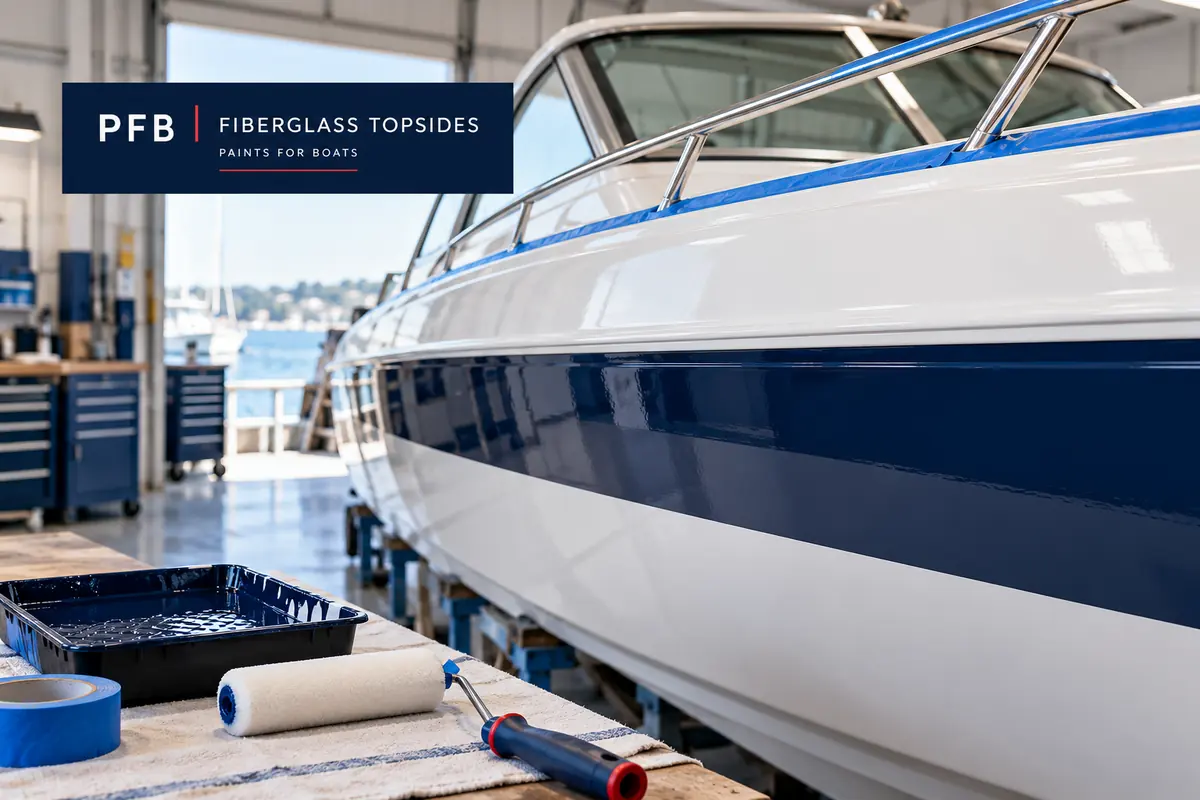
A fiberglass topside repaint starts with identifying the surface already on the boat. Sound gelcoat, old paint, exposed laminate, and repaired areas do not present the same preparation problem. Choose a coating system approved for that combination, then follow its cleaning, repair, sanding, priming, and application sequence.
This guide concerns the hull sides above the waterline. For submerged surfaces, first read topside paint versus bottom paint. A glossy topside finish does not establish suitability for continuous immersion.
1. Inspect and identify the existing surface
Wash off loose dirt so you can see what needs attention. Photograph cracks, chips, peeling edges, and old repairs before sanding. Note whether the surface appears to be original gelcoat or an existing paint system, and look for previous product records.
Separate cosmetic work from defects that need diagnosis. A spreading crack, soft area, or recurring blister deserves attention before it disappears beneath new paint. Mark these areas on a sketch and resolve the repair method before planning finish coats.
Do not assume that a harder new coating will strengthen weak old paint. Interlux calls for removal of coatings in poor condition and removal of a one-part finish when changing to its two-part system. Source: Interlux guidance on removing aged finishes.
For an unidentified coating, ask the chosen manufacturer how to assess adhesion and compatibility. Record its advice and any specified test results. A small attractive patch alone does not document every underlying layer.
2. Choose the complete system before buying supplies
Write down the intended cleaner, repair material, primer if required, and finish. Obtain the current instructions for each. Check that every transition is allowed: gelcoat to repair, repair to primer, and primer to finish.
If you are considering PFB Pro Marine Enamel, request technical instructions confirming the precise fiberglass, repair, and primer combination before ordering. Instructions for a different manufacturer's polyurethane cannot establish PFB compatibility.
Primer requirements vary. TotalBoat, for example, says its Wet Edge can be applied to properly prepared fiberglass without primer, while recommending primer for adhesion. That is a product-specific instruction, not permission to omit primer from another system. Source: TotalBoat's fiberglass primer guidance.
Our marine paint primer guide explains the questions to check. Do not select a primer solely because its name includes “marine” or “multi-surface.”
3. Clean and dewax before sanding
Follow the selected system's cleaning instructions, including its specified products, rinsing requirements, and drying stages. Keep clean cloths separate from used ones and replace them frequently. Work methodically around the hull so no section gets missed.
TotalBoat's Wet Edge instructions put washing and thorough dewaxing ahead of fiberglass sanding, followed by removal of sanding residue. This order matters when planning supplies and labor; starting with a power sander skips the contamination-removal stage. Source: TotalBoat Wet Edge instruction sheet.
Use the required ventilation and protective equipment for the cleaner, abrasive work, and coating. Consult their labels and safety data sheets before opening containers.
4. Repair defects and prepare a uniform surface
Remove failed coating using a method suitable for the underlying fiberglass. Repair damage with materials approved within the planned coating system. Allow repairs to reach their specified preparation stage before fairing or coating them.
Select abrasives from the instructions for the next coating. There is no single grit that correctly prepares every gelcoat, filler, primer, and old finish. Avoid sanding through intact gelcoat merely to make the entire hull look uniformly bare.
Inspect with light directed along the hull. Mark remaining low spots or coarse scratches rather than expecting finish paint to hide them. Remove dust and perform the final cleaning specified for the next layer. Keep hands and dirty tools off the prepared area.
For peeling problems, see why boat paint peels. If the project includes metal sections, consult the separate aluminum boat paint guide and obtain substrate-specific instructions.
5. Prime where the system requires it
Mask the painting boundary and protected fittings. Apply the specified primer to the specified areas, using its required film thickness and coat schedule. After the prescribed drying stage, inspect and prepare it for the finish.
Treat epoxy repair areas as their own preparation checkpoint. For example, TotalBoat's Topside Primer instructions require a washing stage to remove amine blush from cured epoxy before sanding. Follow your actual repair and primer instructions rather than substituting a solvent wipe for every kind of contamination. Source: TotalBoat Topside Primer instruction sheet.
6. Apply the finish and plan its cure
Estimate material with our boat paint quantity guide. Lay out tools, safe access, and a place to stop at a natural edge before starting. Check the product's permitted application method and environmental limits.
For a finish approved for rolling and tipping, plan sections small enough to blend into the preceding wet section. Use suitable rollers and brushes, follow the specified film thickness, and avoid repeatedly brushing paint that has begun to set. TotalBoat describes this wet-edge approach in its application guide. Source: TotalBoat topside application guide.
Record application conditions and coat times. Follow the actual recoat and sanding instructions, then protect the finish through its return-to-service period. Check the masking-removal instructions before the last coat so tape removal is part of the plan.
Frequently asked questions
Can I paint directly over fiberglass gelcoat?
Some systems allow properly prepared gelcoat; others require primer. Confirm the complete gelcoat, repair, primer, and finish combination with the selected manufacturer.
Should I remove wax before sanding fiberglass?
Yes. Use the specified cleaning process before sanding, then remove sanding residue as directed.
Do I need to remove all the old paint?
Remove failing or incompatible coatings. Sound paint can remain only when the selected system permits it and its compatibility requirements are satisfied.
How long must fiberglass topside paint cure before use?
Follow its return-to-service instructions for the actual conditions. Touch dry, ready to recoat, and ready for service are different stages.
Manufacturer sources
Need to know how much paint to buy?
Start with your boat dimensions, then check coverage and coats against the selected coating's technical sheet.
Use the Paint Calculator →