Why Boat Paint Peels: Diagnose and Repair Adhesion Failure
2026 guide series · Editorial timeline: October 27, 2026. First published October 27, 2026.
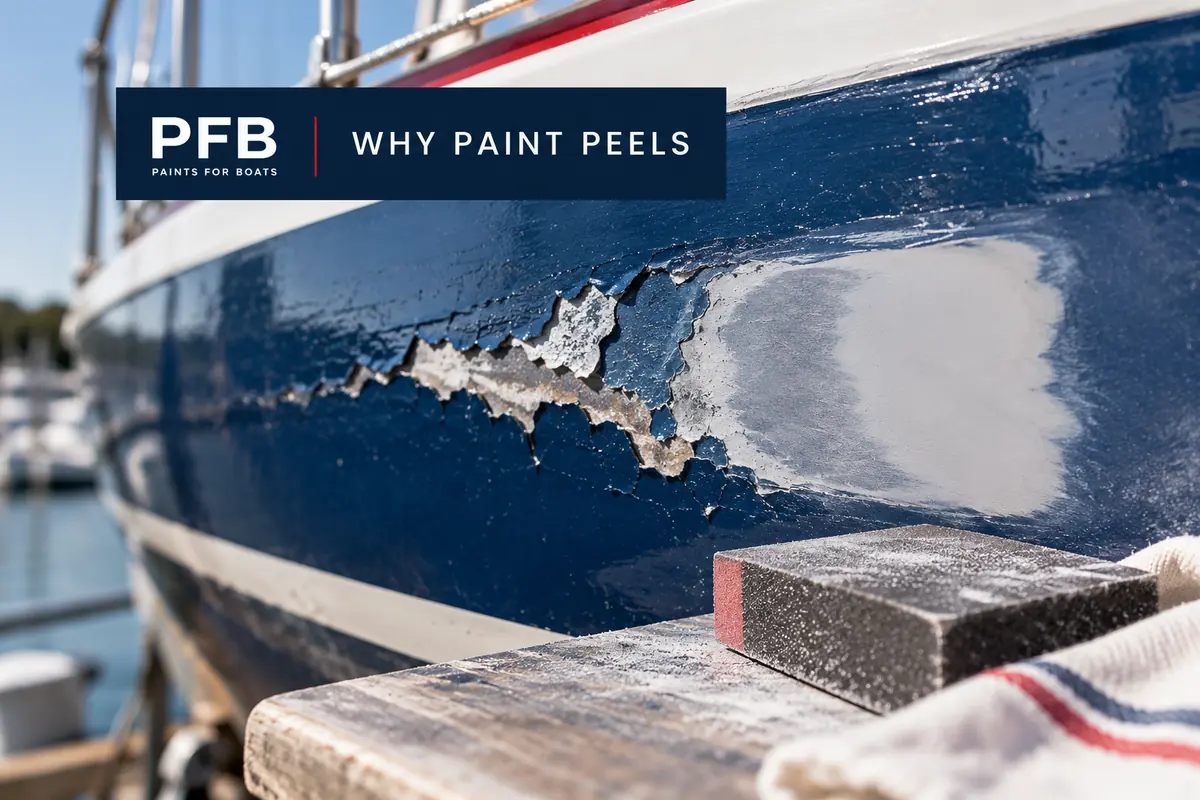
Boat paint peels when a bond fails somewhere in the coating system. The useful question is where: between the hull and primer, between paint layers, or within a deteriorating older coating. Another coat of paint leaves that weak link in place.
Start by documenting the failure, then decide how much coating to remove and what must change before repainting. This guide concerns maintenance diagnosis, chiefly above the waterline. Bottom-paint failures need the specific antifouling manufacturer's repair procedure.
Find the layer that let go
Photograph the patch before disturbing it. Record when it appeared, whether it followed painting or launching, and whether nearby areas remain sound. Save a loose flake if it shows the layers clearly.
Look at both the exposed surface and the underside of the flake. Bare substrate suggests failure near the first coat; primer remaining on the boat suggests separation farther up. Color alone cannot identify an unknown coating, so compare observations with records and product codes.
Interlux lists contamination, corrosion, incompatible coating schemes, missed overcoat windows, excessive thickness, and accumulated old coatings among causes of peeling. Appearance provides clues, not proof of a single cause. Interlux peeling-paint guidance.
| What you observe | What to investigate next |
|---|---|
| New finish lifts while old paint stays attached | Preparation, compatibility, and overcoat intervals between those layers |
| Several layers detach together | Adhesion of the oldest retained layer and accumulated coating build |
| Rust or corrosion products under flakes | Condition of the metal and adequacy of its preparation |
| Bubbles develop before peeling | Moisture, hot application, trapped solvent, or excessive thickness |
| Damage follows wet trailer supports | Prolonged moisture contact and the coating's service limits |
Investigate the likely cause
Contamination or inadequate preparation
Check what was used to remove wax, grease, polishing residue, and dust. Was the surface cleaned before sanding? Were clean cloths used, or was contamination spread around? Awlgrip's application guide emphasizes cleaning first and describes a two-cloth process for its specified cleaners. Use the procedure approved for your chosen system. Awlgrip surface-cleaning guidance.
Epoxy repairs add another question: was any amine blush washed away before abrasion? Wax and blush are different contaminants. TotalBoat specifies washing and preparation steps for epoxy beneath its topside primer. TotalBoat topside-primer instructions.
Incompatible layers or incorrect timing
Find the previous primer and paint names if possible. A harder or more expensive finish cannot make an unidentified old coating compatible. Do not identify chemistry with a universal solvent-rub test or assume that two products described as "acrylic" will work together.
Ask the coating manufacturer for its assessment and any approved adhesion or compatibility test, including cure conditions and acceptance criteria. A representative repair patch is more useful than committing the whole hull before questions are resolved. Awlgrip's guide treats adhesion and compatibility checks as separate assessments. Awlgrip coating-assessment guidance.
Moisture, thick coats, and drying conditions
Review the application log: temperature, coat times, thickness, and overnight exposure. Interlux connects blistering with heavy or rapid application, hot or windy conditions, and moisture during cure. Its weather guidance also explains why surface temperature and condensation matter throughout drying. Interlux blistering guidance, weather guidance.
Trace recurring wet patches to leaks or water-holding supports. Topsides coatings may blister under prolonged wet trailer padding even when the boat spends most of its time ashore. Interlux immersion guidance. Check topside versus bottom paint before repainting an area that stays submerged.
Decide between a patch and wider removal
A patch is reasonable only when removal reaches firmly adhered coating and the retained system is compatible. If the edge keeps lifting, stop expanding a cosmetic patch without reassessing the whole area. Interlux advises removing the entire coating or system when a firm boundary cannot be established. Interlux repair guidance.
Pause coating work if you find deep pitting, metal loss, leaking seams, soft laminate, or rotten wood. Obtain a suitable repair assessment; paint and filler do not establish structural soundness. Use the aluminum preparation guide or fiberglass topside guide only after resolving underlying damage and confirming the selected product instructions.
Rebuild the repair without repeating the failure
- Remove the weak layers. Establish sound material and feather retained coating as directed. Identify old coatings before choosing removal methods; follow the applicable safety data sheets.
- Correct the cause. Repair leaks or damage and remove contamination using the specified process. Complete substrate preparation and allow the necessary drying.
- Confirm the replacement system. Obtain written substrate and topcoat approval. The available Dux acrylic primer sheet describes interior building surfaces; its red oxide sheet describes an industrial alkyd primer. Neither establishes a general aluminum boat system. Dux acrylic sheet, Dux red oxide sheet.
- Apply to the documented schedule. Follow film thickness, sanding, overcoat, and return-to-service requirements. Keep a record for the next repair.
When reviewing PFB Surface Primer or PFB Marine Metal Primer, request the matching current technical sheet and verify the proposed repair against it. For yard-scale work, send photographs, substrate details, and coating history with a bulk inquiry. Then use the hull painting sequence and paint quantity guide to plan materials after the repair boundary is known.
Frequently asked questions
Can I paint over peeling boat paint?
Remove loose coating and establish a firmly adhered, compatible boundary first. If failure continues beyond the visible patch, wider removal may be needed before repainting.
Why did my new boat paint peel after a few days?
Possible causes include contamination, an incompatible underlying coating, missed preparation or overcoat requirements, excessive film thickness, and unsuitable drying conditions. Inspect the failed layer before choosing a repair.
Will another coat of primer stop peeling?
Primer cannot restore the bond beneath a failing layer. Remove the weak material, correct the underlying cause, and use a primer approved for the exposed substrate and selected finish.
Does peeling paint mean my boat has structural damage?
Not necessarily, but deep pitting, metal loss, soft laminate, rot, leaks, or damaged joints need assessment before cosmetic coating work continues.
Sources
- Interlux peeling-paint diagnosis and repair
- Interlux blistering guidance, weather guidance, and immersion guidance
- Awlgrip application guide, surface cleaning and coating assessment
- TotalBoat topside-primer preparation instructions
- Dux Acrylic Latex Primer #398 and Red Oxide Primer #343 technical sheets
Need to know how much paint to buy?
Start with your boat dimensions, then check coverage and coats against the selected coating's technical sheet.
Use the Paint Calculator →